Fieldbus integration turns an actuator from a wired motor into a node on the plant control network. Done well, it cuts cable runs, brings diagnostics into the control room, and lets the plant respond to actuator events with the same software stack it uses for the rest of the process. Done poorly, it introduces network failure modes the original hardwired design did not have. This note covers what intelligent electric actuators expose, which protocols match which project profile, and where projects typically run into trouble.
MODBUS RTU over RS-485 is the most common entry point. It is open, well understood, supported by every PLC and SCADA platform, and needs only two wires plus shield. Bus topology, addressing, baud rate, parity, and stop bits must be aligned across all nodes; loop checks should verify register maps before commissioning. MODBUS does not include explicit fail-safe behaviour — the actuator must be configured to interpret loss-of-communications as either stay-put, fail-open, or fail-closed, and that choice belongs to the safety case, not the network engineer.
PROFIBUS DP carries faster cycle times and richer diagnostics than MODBUS, at the cost of more configuration. GSD files, slave addressing, watchdog timers, and master-slave timing must be reviewed before installation. PROFIBUS suits larger plants with established Siemens / ABB ecosystems and where actuator diagnostics are part of the asset management strategy. Other plant buses should be treated as project-specific integration requirements rather than assumed standard options.
Analogue 4-20 mA remains valid for modulating control valves where the loop is fully hardwired and the plant prefers loop integrity over network features. Discrete contact signals (open, close, common alarm) still cover many on/off valves with no network presence required.
Intelligent actuators expose status (position, torque trip, motor temperature, last fault code) and accept commands (open, close, stop, position setpoint, ESD override) over the chosen bus. Projects should specify which registers are mandatory in the as-built documentation so SCADA tag mapping happens once, not three times during commissioning.
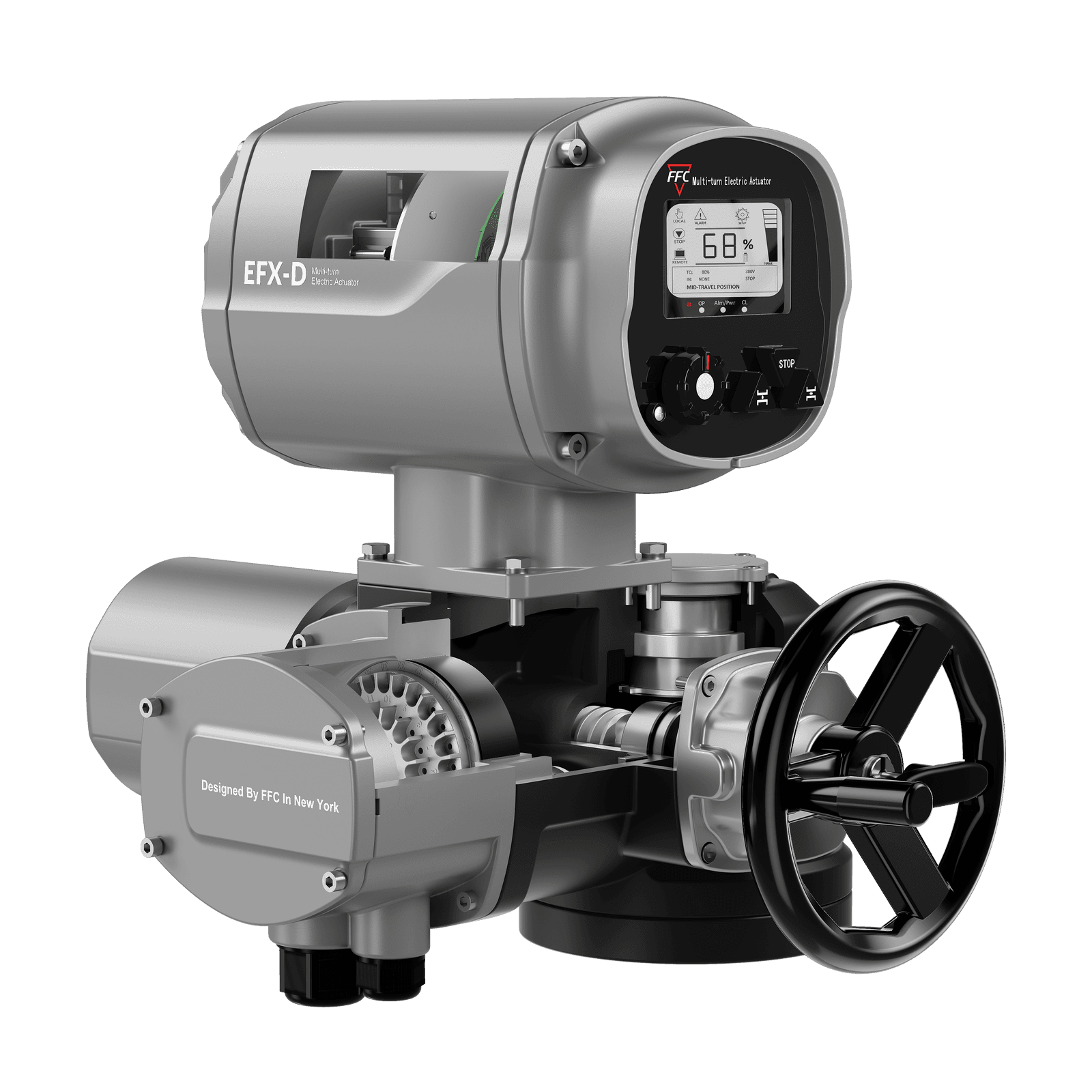
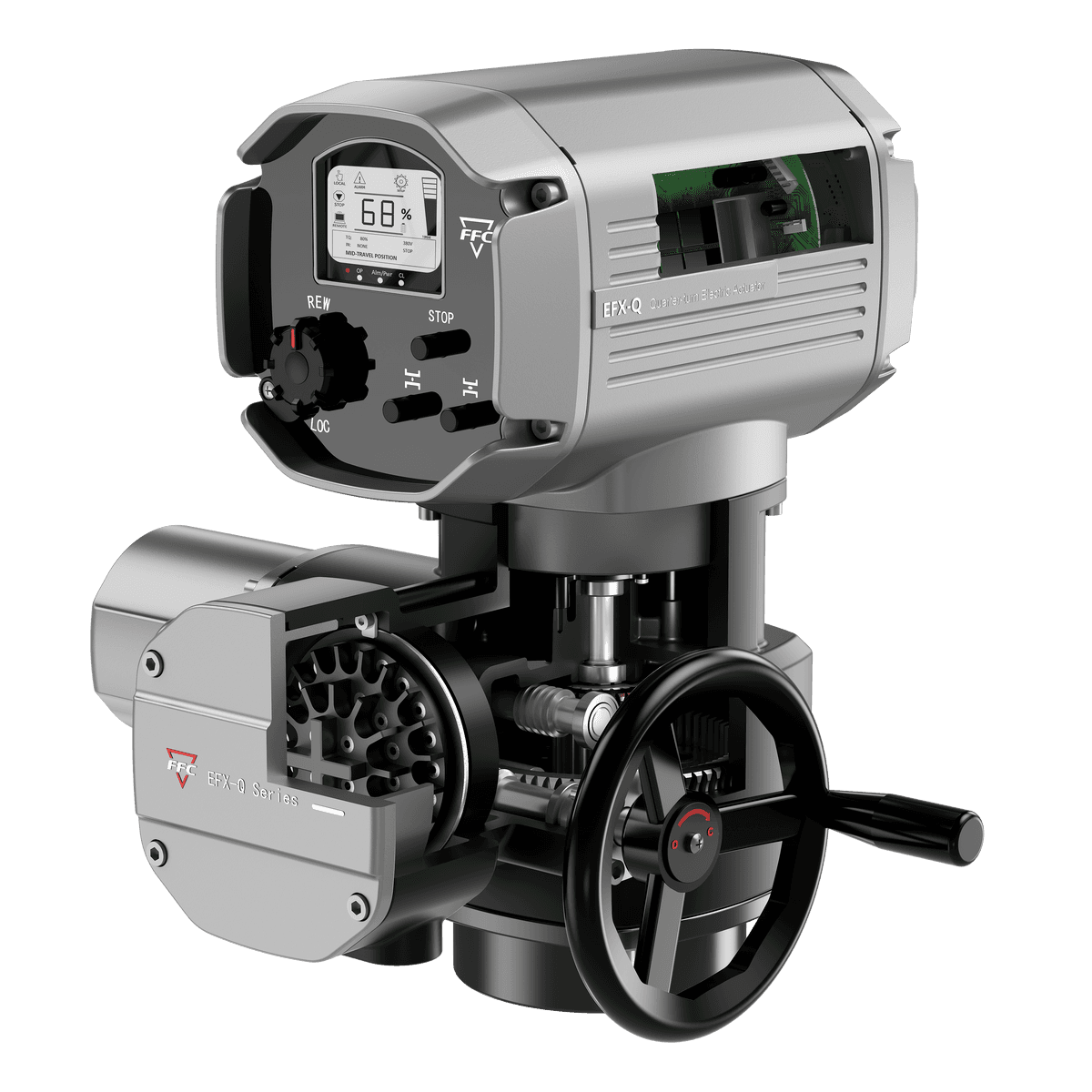
FFC EFX-D and EFX-Q both support MODBUS RTU and PROFIBUS DP as configurable communication options alongside discrete and 4-20 mA control. Specific register maps, supported baud rates, and certification details depend on the order — share the plant control specification and FFC will confirm the configuration.