Actuator selection is the first place a valve automation project can go wrong, and the last place a control system can compensate. Get the torque, enclosure, control mode, and certification wrong at procurement and no amount of programming will rescue the installation. This guide walks through the five inputs every engineer needs before specifying an electric actuator.
Start with valve torque. The actuator must supply both the break torque required to unseat a stuck valve and the running torque required to move it through stroke. Vendor data sheets list maximum output torque; the actuator must exceed the worst-case valve torque with margin — typically 25-50 percent depending on duty cycle and safety classification. Multi-turn valves (gate, globe, sluice) need turn count and operating time as well; part-turn valves (ball, butterfly, plug) need quarter-turn duty.
Next consider the duty cycle. On/off isolation valves cycle a few times per day; modulating control valves may cycle hundreds of times per hour. The actuator class — short-time (S2), intermittent (S4), continuous (S9) — must match. Modulating service generally needs a higher class and a brushless or PMSM motor; on/off duty can use simpler motor types.
Process environment determines enclosure, sealing, and certification. Outdoor and washdown installations need IP66 or IP67 minimum; flooded or buried valves need IP68. Hazardous areas need explosion-proof or intrinsically safe certification matching the zone, gas group, and temperature class. Saltwater, chlorine, or chemical splash environments need corrosion-resistant materials on housing, fasteners, and stem couplings.
Finally specify the control and feedback interface. The plant DCS or PLC dictates whether the actuator uses MODBUS RTU, PROFIBUS DP, or hardwired 4-20 mA and discrete signals. Local manual override, emergency shutdown (ESD), partial-stroke testing, and position feedback (0-100 percent) are common requirements that should be specified upfront — adding them later usually means a different actuator.
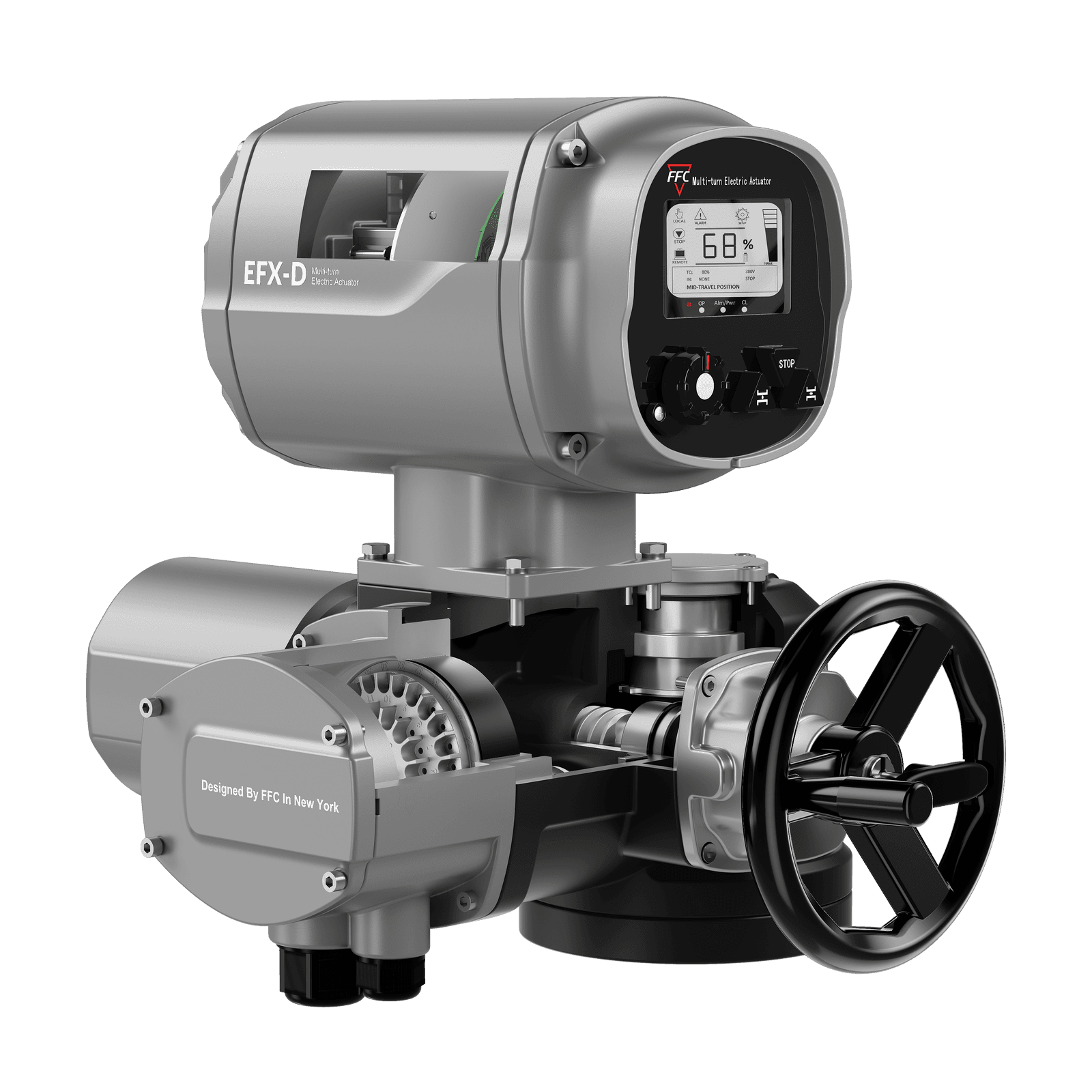
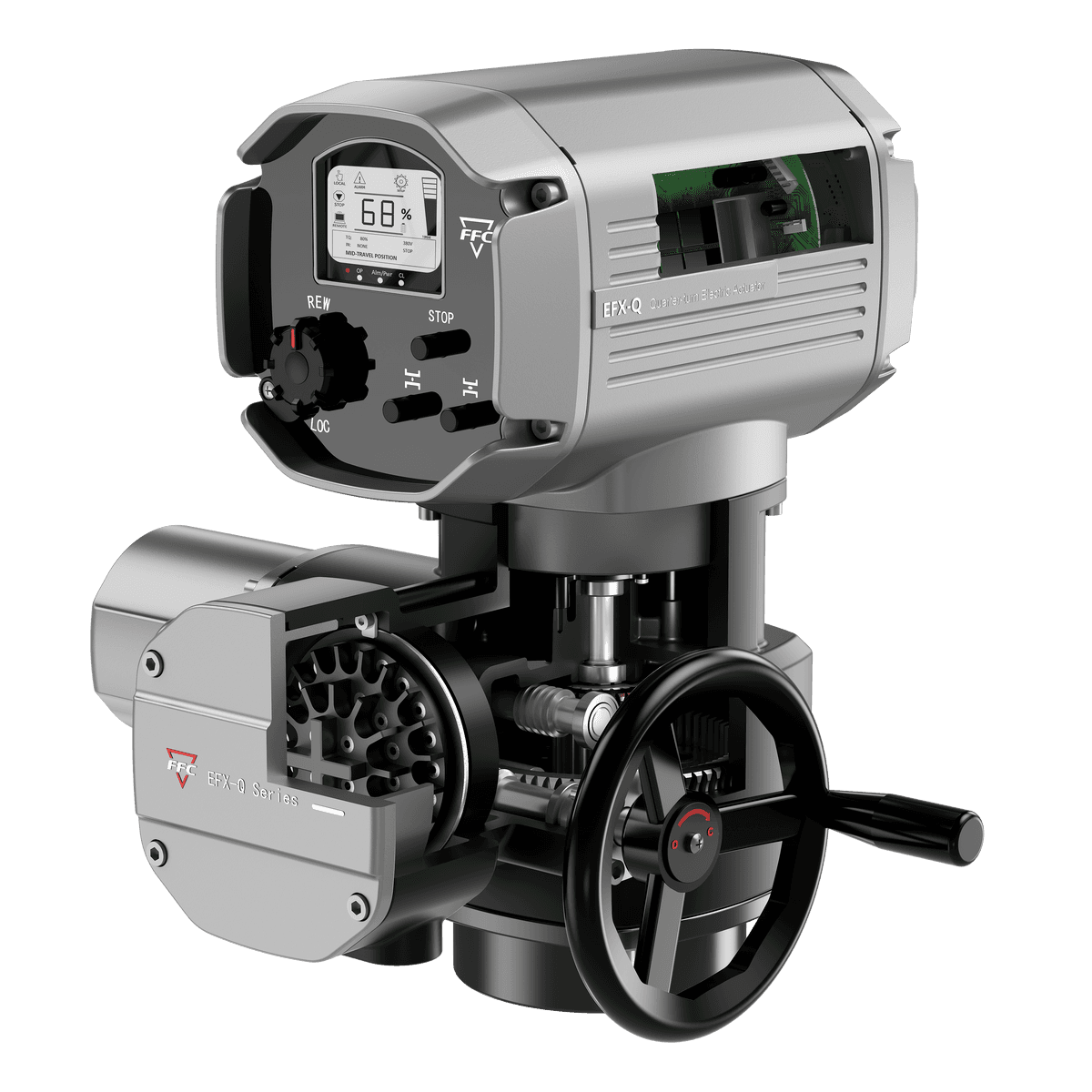
FFC EFX-D covers multi-turn isolation and modulating duties (gate, globe, sluice) and EFX-Q covers part-turn duties (ball, butterfly, plug, damper). Configurable torque, stroke, operating time, communication protocol, and certification options are confirmed against the project specification — share the valve data and FFC will recommend the right model.