IP68 and explosion-proof are two of the most over-specified actuator features in industrial procurement. Engineers add them out of caution; vendors add them to differentiate; and finished installations carry capability they will never use. The reverse error — under-specifying — is rare but expensive. This note walks through what IP68 actually guarantees, what explosion-proof actually requires, and how to match them to the real risk on site.
Ingress protection (IP) ratings follow IEC 60529. The first digit is dust ingress: 6 is dust-tight, the maximum. The second digit is water ingress: 6 is heavy seas, 7 is short-term submersion (30 minutes at 1 metre), 8 is continuous submersion under conditions specified by the manufacturer. An IP68 rating is meaningful only if you also know the manufacturer's stated depth and duration — different vendors test to different conditions. For above-ground outdoor valves IP66 or IP67 is typically enough; for buried or potentially flooded valves IP68 is justified.
Explosion-proof and intrinsically safe certifications protect against ignition in atmospheres that contain flammable gas, vapour, or dust. The right certification depends on the zone classification (Zone 0 / 1 / 2 for gas, Zone 20 / 21 / 22 for dust), the gas group (IIA / IIB / IIC by ignition energy), and the temperature class (T1 through T6 by surface temperature). North American projects use Class / Division / Group instead. The valve site engineer or safety case owner classifies the zone; the actuator certification must match that classification, not exceed it for the sake of caution.
Cable entry sealing and gland selection are where many IP and Ex installations fail at site. The actuator certification is for the housing as designed and tested; if a contractor installs a non-certified gland or leaves an entry uncapped, the certification is invalid. Project handover should include cable gland torque values, sealant types, and unused entry blanking plugs.
Ambient temperature also affects both ratings. IP seals lose effectiveness at temperature extremes; Ex certification is bounded by the temperature class. Arctic or desert installations need actuators rated for the full ambient envelope, not just the typical site temperature. Maintenance access — being able to open the housing safely without de-energising the wider line — should also be specified.
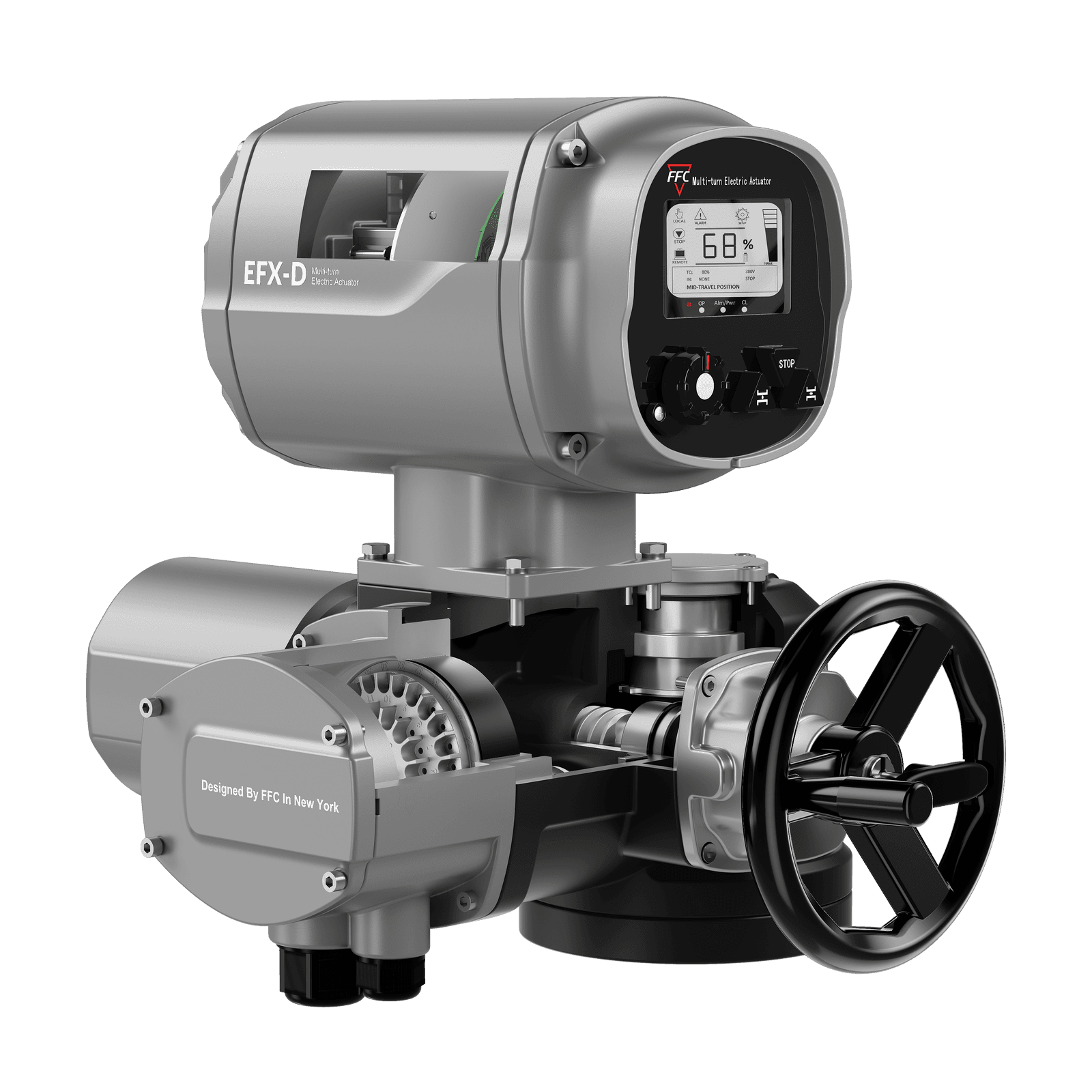
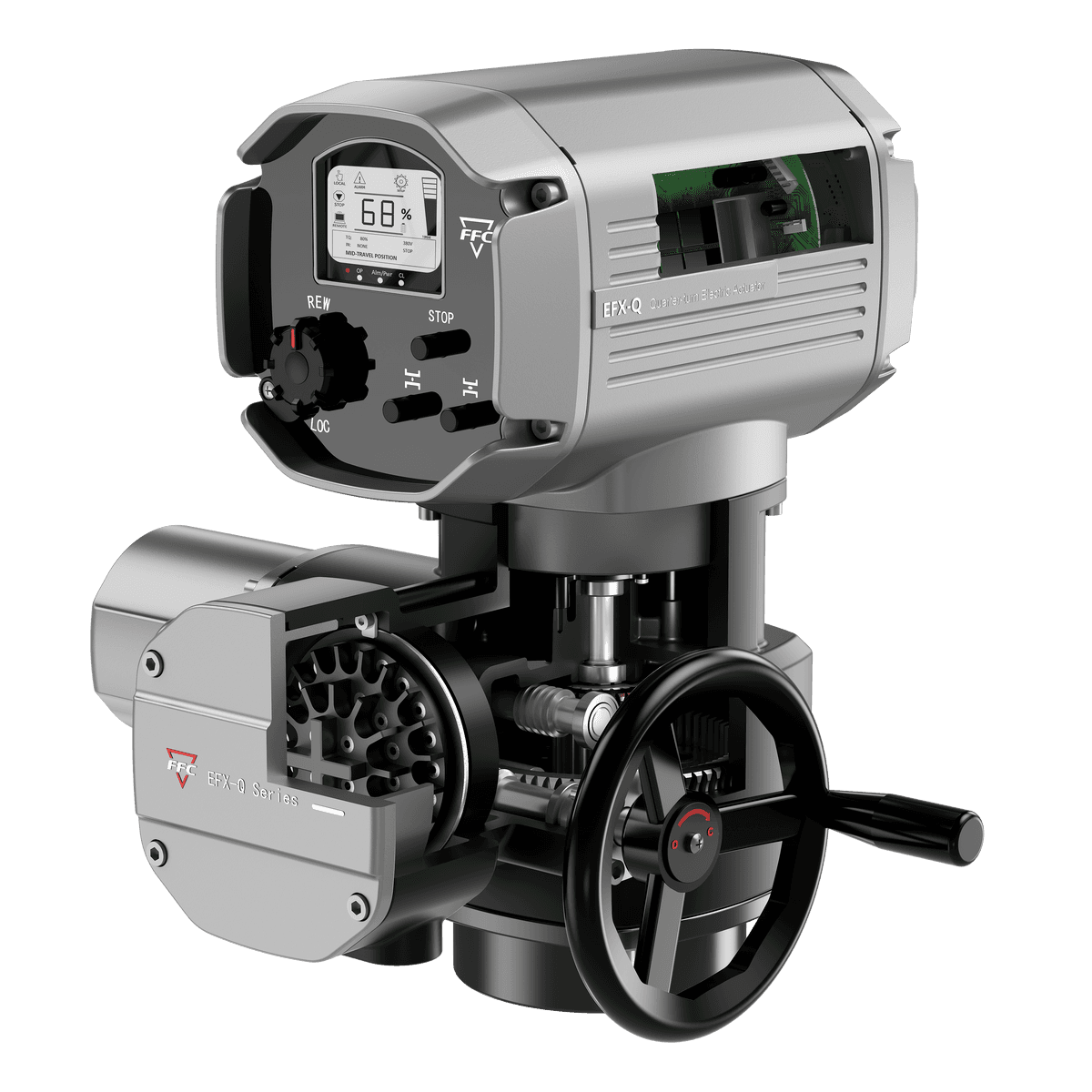
FFC EFX-D and EFX-Q ship with IP66 / IP67 standard and IP68 optional, with explosion-proof variants available on request. The specific certification path (ATEX, IECEx, CSA), gland kit, and temperature range are project-dependent — share the area classification and hazard analysis and FFC will confirm the variant.